



































What is the role of prestressed concrete in cantilever span bridges?

Prestressed concrete plays a central role in modern bridge engineering, especially when designing complex cantilever span bridges that must carry heavy loads over long distances. At Armfield, we support this field with advanced experimental apparatus for cantilever bridge engineers, helping professionals and students understand the structural principles behind these impressive structures.
What is prestressed concrete and how does it differ from traditional concrete?
Concrete is strong in compression but weak in tensile strength. Traditional reinforced concrete uses steel bars to improve this, but prestressed concrete bridges go further.
Prestressed concrete involves tensioning steel strands or tendons before or after the concrete is cast. This introduces compressive forces that counteract tensile stresses during use. As a result, the material resists cracking, improves shear strength, and performs better under live loads and heavy loads.
This engineering breakthrough has allowed longer span length, reduced material use, and improved durability in bridge construction.
Understanding cantilever span bridges
A cantilever bridge is built using projecting arms called cantilever arms, which extend from supports without immediate external support at the free end.
In a balanced cantilever bridge, segments are added symmetrically from a central pier head. This ensures balance during construction. These bridges differ from suspension bridges and continuous bridges because they do not rely on cables or continuous support across the entire span.
Common forms include:
- Steel truss cantilever bridge
- Concrete cantilever spans
- Continuous cantilever bridges
They are ideal for difficult crossings, such as wide rivers or valleys, where temporary supports are limited.
The role of prestressed concrete in cantilever span bridges
Prestressed concrete is fundamental to the success of the cantilever method. It allows each segment to handle bending moment, lateral loads, and vertical loads effectively during and after construction.
In a typical balanced cantilever method:
- Precast segments or cast-in-place segments are added progressively
- Each segment is prestressed using longitudinal tendons
- The structure maintains stability without needing full scaffolding
This approach improves safety, reduces reliance on temporary supports, and enhances the performance of the superstructure.
At Armfield, our experimental systems allow engineers to simulate these forces in real-world scenarios, providing hands-on insight into how prestressed systems behave under load.
A brief history of prestressed concrete in bridges
Prestressed concrete emerged in the early 20th century as an innovation in bridge engineering. Over time, it replaced many traditional simple beams and steel-heavy designs.
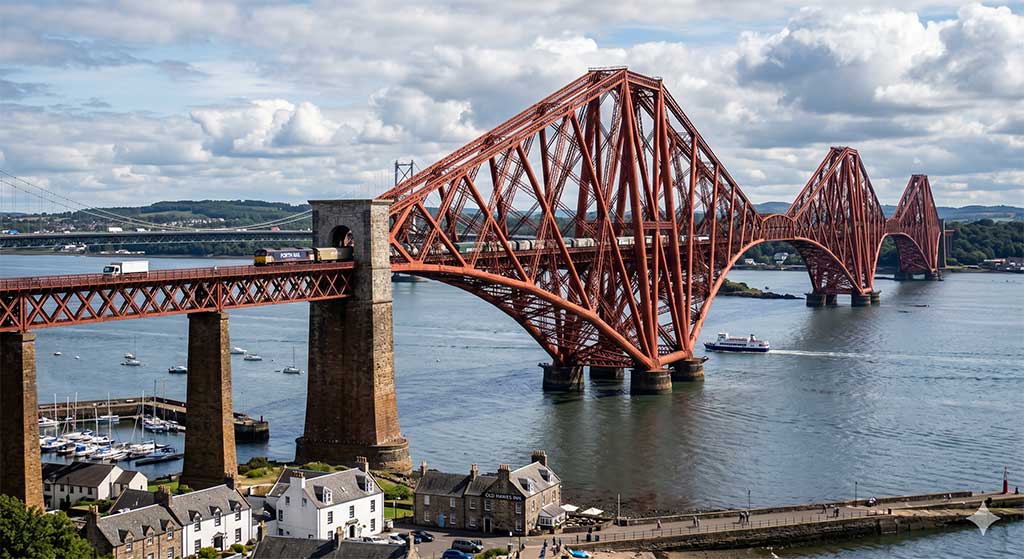
Historic bridges such as the Forth Bridge and Quebec Bridge highlight early cantilever principles, though they relied heavily on structural steel.
Modern examples like the Vejle Fjord Bridge demonstrate how prestressed concrete has evolved into a dominant structural type.
Types of prestressed concrete used
There are two main forms used in prestressed concrete bridges:
- Pre-tensioned concrete
Steel tendons are tensioned before pouring concrete - Post-tensioned concrete
Tendons are tensioned after the concrete has hardened
Post-tensioning is widely used in box girder designs and concrete cantilever spans, especially where long spans and flexibility are required.
Construction process using the cantilever method
The construction method for these bridges involves careful construction stage analysis to ensure safety and precision.
Key steps include:
- Building foundation piers and supports
- Installing formwork or using precast segments
- Applying prestress forces via tendons
- Extending cantilever arms segment by segment
- Completing the central span or suspended span
Advanced erection equipment is often used to position segments accurately. Considerations such as concrete creep, differential settlement, and material properties must be carefully managed.
Armfield’s experimental apparatus provides controlled environments to study these factors in detail, supporting better outcomes in real-world bridge construction.
Advantages of prestressed concrete in cantilever bridges
Prestressed concrete offers several benefits:
- Higher tensile strength and durability
- Improved resistance to cracking and deformation
- Efficient handling of lateral loads and vertical loads
- Reduced maintenance over time
- Suitable for long spans and heavy traffic
These advantages make it a preferred choice for rail traffic use trusses, highways, and even some footbridges.
Challenges and limitations
Despite its benefits, there are challenges:
- Requires precise design and construction stage analysis
- Higher initial cost compared to basic concrete
- Sensitive to errors in tensioning or alignment
- Long-term effects like concrete creep must be considered
However, with modern tools and testing systems such as those developed by Armfield, these risks can be mitigated effectively.
Frequently Asked Questions
What distinguishes a steel truss cantilever bridge from other bridge types?
A steel truss cantilever bridge uses a framework of interconnected steel members to distribute loads. It differs from other bridges by relying on cantilever arms rather than continuous support.
How does concrete contribute to strength in a truss bridge?
Concrete improves compressive capacity, while prestressing enhances tensile strength, allowing the structure to resist bending and heavy loads more effectively.
Can prestressed concrete be used in all bridge types?
Prestressed concrete is versatile and used in many designs, including continuous bridges, cantilever bridges, and even small footbridges, though it is especially effective in long-span applications.
How do lateral loads affect cantilever bridge design?
Lateral loads, such as wind or seismic forces, create additional stress. Prestressed systems help resist these forces and maintain structural integrity.
Why is structural steel often combined with prestressed concrete?
Structural steel provides flexibility and tensile reinforcement, while prestressed concrete delivers compressive strength. Together, they create a balanced and efficient structure.

Final thoughts on prestressed concrete in cantilever span bridges
Prestressed concrete has transformed how engineers approach bridge design, particularly for balanced cantilever bridges and complex crossings. Its ability to manage forces, reduce material use, and improve durability makes it essential in modern infrastructure.
At Armfield, we continue to support this evolution by providing industry-leading experimental apparatus for cantilever bridge engineers, helping professionals refine designs and improve performance.
Ready to explore advanced bridge engineering solutions?
Contact Armfield today to discover how our experimental apparatus can support your cantilever bridge projects:
